

About this breed
The Labrador is the most popular of all pedigree breeds and his popularity comes from his versatility as family companion, service dog, guide dog as well as a working gundog.
The breed originates from Newfoundland, which from the 16th century was renowned for the fishing industry with well-established trading routes between England and Canada. Dogs were used there to help fishermen retrieve nets and lost lines and pull carts loaded with fish. The Newfoundland dogs were smaller than they are today and a smaller variety was known as the St John’s dog. It is thought that these breeds crossed with hunting dogs taken to Newfoundland by English traders and fishermen formed the basis for the modern Labrador.
Some of the dogs resulting from this breeding were taken back to England where their retrieving skills were recognised by the sporting gentry. One of the early patrons of the breed, the Earl of Malmesbury gave the breed its name. The first breed club was founded in 1916.
Images for this breed
The Gundog breed group
Dogs that were originally trained to find live game and/or to retrieve game that had been shot and wounded. This group is divided into four categories - Retrievers, Spaniels, Hunt/Point/Retrieve, Pointers and Setters - although many of the breeds are capable of doing the same work as the other sub-groups. They make good companions, their temperament making them ideal all-round family dogs.
Colour Watch
Category 4: Breeds with >30% registered NBS colours or more than 1000 NBS registrations per annum
Breed Standard colours
Breed standard colour means that the colour is accepted within the breed standard and is a traditional and well-known colour in this breed.
Breed standard colours in this breed include:
- Black
- Chocolate
- Liver
- Yellow
Non-breed-standard colours
Non-breed-standard colour means that the colour is not accepted within the breed standard and whilst some dogs within the breed may be this colour, it is advised to only select a dog that fits within the breed standards for all points.
Colour is only one consideration when picking a breed or individual dog. Health and temperament should always be a priority over colour.
Non-breed-standard colours in this breed include:
- (NBS) Charcoal
- (NBS) Champagne
- (NBS) Silver
Other colour/s
'Other' means you consider your puppy to be a colour not currently known within the breed and one that does not appear on either the breed standard or non-breed-standard list. In this instance you would be directed through our registration process to contact a breed club and/or council to support you on identifying and correctly listing the new colour.
Dilute coat colour DNA test
We record the results for a dilute coat colour DNA test (d1) for Labrador Retrievers on our database. This particular gene variant affects the colouring of a dog’s hair, eyes and skin, including their nose, making them paler than expected (dilute). Learn more out about this DNA test and find a list of dogs that have tested clear for this dilute variant.
Health
Whether you're considering buying a Retriever (Labrador) puppy or breeding from your dog, it's important to understand the health issues that may affect the breed and how they can be managed or avoided.
Pre-breeding health screening
Good Practice schemes and tests
We strongly recommend that breeders, at a minimum, conduct these tests before breeding, as evidence indicates these conditions are a significant concern in the breed.
- DNA test for Centronuclear myopathy (CNM) - Find a list of tested dogs here
- DNA test for Exercise induced collapse (EIC) - Find a list of tested dogs here
- DNA test for Macular corneal dystrophy (MCD) - Find a list of tested dogs here
- DNA test for Progressive retinal atrophy (prcd-PRA) - Find a list of tested dogs here
- DNA test for Skeletal dysplasia (SD2) - Find a list of tested dogs here
- DNA test for Stargadt disease (STGD) - Find a list of tested dogs here
- Elbow testing (for elbow dysplasia) using the BVA/KC Elbow Dysplasia Scheme
- Hip testing (for hip dysplasia) using the BVA/KC Hip Dysplasia Scheme
- NEW test amended June 2025 – Eye testing using the BVA/KC/ISDS Eye Scheme. This test will be added formally to the Health Standard and Find a Puppy from Dec 2025 and breeders should ensure their dog is tested for this, and other pertinent tests, prior to this date to meet Good Practice
Best Practice schemes and tests
These tests address conditions that are still significant for the breed, though they may not be as critical as those listed under Good Practice. They might be less common or newly identified, and research is ongoing to determine their full impact.
To support the breed’s health, responsible breeders should ensure they complete all tests in both categories. Following our Best Practice guidelines means completing both the Good Practice and Best Practice tests for your breed.
- DNA test for hereditary nasal parakeratosis (HNPK) - Find a list of tested dogs here
This breed can be affected by conformational concerns, more information can be found here
Click here to find out more about The Kennel Club's health standard
Find out about a particular dog's results
Please visit our Health Test Results Finder to discover the DNA or screening scheme test results for any dog on The Kennel Club's Breed or Activity Register.
You can also view the inbreeding coefficient calculation for a puppy's parents, or for a dog you're thinking of breeding from.
DNA testing services
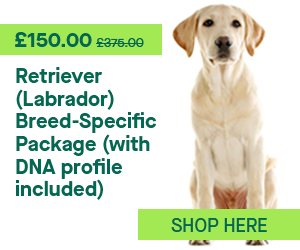
To support your health testing journey, we provide our tailored Retriever (Labrador) Breed-Specific DNA Package. Giving you the information you need about potential health risks, this package includes screening for Centronuclear myopathy (CNM), Progressive retinal atrophy (prcd-PRA), Skeletal dysplasia 2, (SD2 Stargardt disease (STGD), Macular corneal dystrophy (MCD), Dilute (D-locus, d1 variant) and DNA Profile (SNP - ISAG 2020).
7 essential tests valued at £375 for just £150, that screen for multiple conditions at once, saving you time and providing vital health information.
The breeding for health framework
Throughout 2025 we ran a major review of our pedigree dog health work, from which we have developed a new model called the breeding for health framework.
This framework covers all aspects of health and welfare that should influence breeding decisions for any breed or type of dog, building on from our previous Breed Health and Conservation Plans, and is broken down into three main areas of health:
- inbreeding/ genetic diversity
- conformation
- breed-related disease/ wellbeing
By applying the breeding for health framework, we can group all the breeds that share a certain issue together, so that we can provide targeted support and breed communities can share relevant experiences and expertise. All previous actions and priorities from the Breed Health and Conservation Plans are being transitioned into the new framework.
You can read more about the breeding for health framework here, and watch this space as we update and progress this framework to apply to your breed
More about health
If you have any concerns about a particular health condition in your breed then you may wish to speak to your vet or you could contact your breed health co-ordinator.
Breed health co-ordinators are individuals working on behalf of breed clubs and councils who are advocates for the health and welfare of their chosen breed. They acts as a spokesperson on matters of health and will collaborate with The Kennel Club on any health concerns the breed may have.
To contact your breed health co-ordinator please email either
or
Joy Venturi-Rose
Breed watch
Category 2
Particular points of concern for individual breeds may include features not specifically highlighted in the breed standard including current issues. In some breeds, features may be listed which, if exaggerated, might potentially affect the breed in the future.
Breeding restrictions
There are a number of The Kennel Club rules and regulations that may prevent a litter from being registered, find out about our general and breed specific breeding restrictions below.
More about breeding
Where the two parent dogs are both yellow it is only genetically possible to produce yellow puppies. Therefore, The Kennel Club will only accept the registration of yellow puppies from this mating.
Where the two parent dogs are both chocolate (liver) it is only genetically possible to produce chocolate (liver) or yellow puppies. Therefore, The Kennel Club will only accept the registration of chocolate (liver) or yellow puppies from this mating.

Looking for a puppy?
Looking for a Retriever (Labrador)? Explore our list of puppies and rescue dogs for sale near you.

More information

Need to find out more about a breed?
Use our Find a Club service to locate a breed club who can offer support and advice for the breed you're interested in.

Use our Find a Puppy service
The Royal Kennel Club's Find a Puppy service connects you with breeders who have puppies available. Search our register, and let's help you find your new best friend.

Get the best lifetime pet insurance
At Royal Kennel Club Pet Insurance, we want you to focus on getting the best possible treatment for your dog without worrying about the cost.