

About this breed
It is thought that the Roman army, marching north on their campaigns, took cattle with them to provide meat and so their herding dogs accompanied them. As the herd diminished, the dogs became redundant and were often left behind. The town of Rottweil in Southwest Germany was for centuries a livestock market and the breed was developed there by cattle dealers and farmers who wanted a strong drovers' dog, which could also act as a guard dog against robbers. The mastiff-type dogs inherited from the Romans, mixed with some sheepdog blood, lead to the creation of the Rottweiler. The Rottweiler proved excellent in both disciplines, combining the athletic movement and stamina of a drovers’ dog with a courageous temperament.
Farmers on their way home from market, fearful of having their money bags stolen, attached them to a collar around the dog's neck – a very safe place as the Rottweiler is territorial and protective of his owner and his property.
Sadly, the breed has often suffered from bad press: the Rottweiler became very popular, often with those seeking a macho image. The breed needs responsible and intelligent owners who can harness the Rottweiler’s intelligence and activity. A well-trained Rottweiler makes a wonderful family companion.
In modern times the Rottweiler has been used by the armed forces and by the police.
Images for this breed
The Working breed group
Over the centuries these dogs were selectively bred to become guards and search and rescue dogs. Arguably, the working group consists of some of the most heroic canines in the world, aiding humans in many walks of life, including the Boxer, Great Dane and St. Bernard. This group consists of the real specialists in their field who excel in their line of work.
Colour Watch
Category 0: Breeds with no NBS colour registration options.
Read more about Colour Watch.
Breed Standard colours
Breed standard colour means that the colour is accepted within the breed standard and is a traditional and well-known colour in this breed.
Breed standard colours in this breed include:
- Black & Tan
Other colour/s
'Other' means you consider your puppy to be a colour not currently known within the breed and one that does not appear on either the breed standard or non-breed standard list. In this instance you would be directed through our registrations process to contact a breed club and/or council to support you on identifying and correctly listing the new colour.
Non-breed standard colours
Non-breed standard colour means that the colour is not accepted within the breed standard and whilst some dogs within the breed may be this colour it is advised to only select a dog that fits within the breed standards for all points.
Colour is only one consideration when picking a breed or individual dog, health and temperament should always be a priority over colour.
Health
Whether you're considering buying a Rottweiler puppy or breeding from your dog, it's important to understand the health issues that may affect the breed and how they can be managed or avoided.
To support your health testing journey, we provide our tailored Rottweiler Breed-Specific Package. Giving you the information you need about potential health risks, this package includes Juvenile laryngeal paralysis & polyneuropathy (JLPP), Leukoencephalomyelopathy (LEMP-2), DNA Profile (SNP - ISAG 2020).
3 essential tests valued at £175 for just £150, that screen for multiple conditions at once, saving you time and providing vital health information. 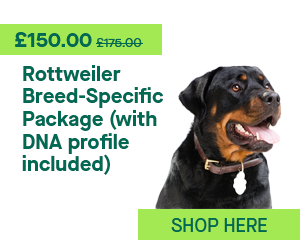
Pre-breeding health screening
Good Practice schemes and tests
We strongly recommend that breeders, at a minimum, conduct these tests before breeding, as evidence indicates these conditions are a significant concern in the breed.
- DNA test for juvenile laryngeal paralysis and polyneuropathy (JLPP) - Find a list of tested dogs here
- Elbow testing (for elbow dysplasia) using the BVA/KC Elbow Dysplasia Scheme
- Hip testing (for hip dysplasia) using the BVA/KC Hip Dysplasia Scheme
Best Practice schemes and tests
These tests address conditions that are still significant for the breed, though they may not be as critical as those listed under Good Practice. They might be less common or newly identified, and research is ongoing to determine their full impact.
To support the breed’s health, responsible breeders should ensure they complete all tests in both categories. Following our Best Practice guidelines means completing both the Good Practice and Best Practice tests for your breed.
- DNA test for leukoencephalomyelopathy (LEMP-2) - Find a list of tested dogs here
- Eye testing using the BVA/KC/ISDS Eye Scheme
This breed can be affected by conformational concerns, more information can be found here
Click here to find out more about The Kennel Club's health standard
Find out about a particular dog's results
Please visit our Health Test Results Finder to discover the DNA or screening scheme test results for any dog on The Kennel Club's Breed or Activity Register.
You can also view the inbreeding coefficient calculation for a puppy's parents, or for a dog you're thinking of breeding from.
DNA testing services
To support your health testing journey, we provide our tailored Rottweiler Breed-Specific Package. Giving you the information you need about potential health risks, this package includes Juvenile laryngeal paralysis & polyneuropathy (JLPP), Leukoencephalomyelopathy (LEMP-2), DNA Profile (SNP - ISAG 2020).
3 essential tests valued at £175 for just £150, that screen for multiple conditions at once, saving you time and providing vital health information.
The breeding for health framework
Throughout 2025 we ran a major review of our pedigree dog health work, from which we have developed a new model called the breeding for health framework.
This framework covers all aspects of health and welfare that should influence breeding decisions for any breed or type of dog, building on from our previous Breed Health and Conservation Plans, and is broken down into three main areas of health:
- inbreeding/ genetic diversity
- conformation
- breed-related disease/ wellbeing
By applying the breeding for health framework, we can group all the breeds that share a certain issue together, so that we can provide targeted support and breed communities can share relevant experiences and expertise. All previous actions and priorities from the Breed Health and Conservation Plans are being transitioned into the new framework.
You can read more about the breeding for health framework here, and watch this space as we update and progress this framework to apply to your breed
More about health
Have any questions about health in your breed?
If you have any concerns about a particular health condition in your breed then you may wish to speak to your vet or you could contact your breed health co-ordinator.
Breed health co-ordinators are individuals working on behalf of breed clubs and councils who are advocates for the health and welfare of their chosen breed. They acts as a spokesperson on matters of health and will collaborate with The Kennel Club on any health concerns the breed may have.
To contact your breed health co-ordinator please email
Health and Breeding Support Team (The Kennel Club)
There are not currently any additional breed specific restrictions in place for this breed.
Breed watch
Category 2
Particular points of concern for individual breeds may include features not specifically highlighted in the breed standard including current issues. In some breeds, features may be listed which, if exaggerated, might potentially affect the breed in the future.
Breeding restrictions
There are a number of The Kennel Club's rules and regulations that may prevent a litter from being registered, find out about our general and breed specific breeding restrictions below.
More about breeding
There are not currently any additional breed specific restrictions in place for this breed.

Looking for a puppy?
Looking for a Rottweiler? Explore our list of puppies and rescue dogs for sale near you.

More information

Need to find out more about a breed?
Use our Find a Club service to locate a breed club who can offer support and advice for the breed you're interested in.

Use our Find a Puppy service
The Royal Kennel Club's Find a Puppy service connects you with breeders who have puppies available. Search our register, and let's help you find your new best friend.

Get the best lifetime pet insurance
At Royal Kennel Club Pet Insurance, we want you to focus on getting the best possible treatment for your dog without worrying about the cost.