


New Royal Kennel Club Pet Insurance data has revealed that claims for behavioural disorders in dogs, including anxiety-related conditions, almost doubled (99%) between autumn 2024 and autumn 2025.
Across 2024 and 2025, September to November recorded the highest number of behavioural disorder claims of any season, with claims totalling more than £110,000 and an average claim value of £551.
The Royal Kennel Club has long highlighted the negative impact loud fireworks can have on dogs and has actively campaigned for measures to reduce their impact on dogs and other animals, including hosting parliamentary events in Westminster and contributing to the recent public fireworks consultation where it encouraged the government to consider action to limit public access to the loudest fireworks.
With these new findings highlighting a rise in behavioural disorder claims coinciding with fireworks season, the RKC is encouraging owners to recognise signs of stress and take steps to keep their dogs calm and comfortable when fireworks begin. The RKC shares its top tips for supporting dogs during fireworks season.
How to prepare your dog for fireworks season
Charlotte McNamara, Chief Canine Wellbeing and Engagement Officer at the Royal Kennel Club, said:
Bonfire Night can be particularly stressful for dogs as many are sensitive to loud noises, unexpected flashes and even the smell of the explosives in the fireworks themselves.
It is well known that dogs have an incredible sense of smell, but their hearing is remarkable too. Dogs can hear sounds that are further away than we can, and they can also detect significantly higher frequencies. A dog’s acute sense of hearing means that loud noises that are tolerable to us might be uncomfortable and unpleasant to them.
In the weeks before bonfire night & firework season
One approach is gradual desensitisation. Try introducing them to recordings of fireworks (there’s a handy playlist available from our experts available here) at a very low volume for a short period of time, while rewarding calm behaviour. As they grow comfortable with the sounds, you can incrementally increase the time period and volume, provided they remain relaxed at each stage. Never tell them off during fireworks for barking, whimpering or acting out of the ordinary. This is likely to make them more distressed and associate fireworks with stress and fear.
Keep your dog on lead during evening walks
Dogs have a fight or flight response just like humans, and being spooked by a firework can trigger dogs to run away if they manage to get off the lead simply from wanting to escape the sound. The safest option is to plan your walks around times you know there won’t be any fireworks, or to always keep your dog on the lead during evening walks when they are likely to be going off.
In the safety of your own home, it is sensible to make sure your garden is fully dog proof as well so dogs can’t escape if they feel frightened by noises nearby. Also ensure that all doors and windows in your house are secured to make sure they aren't able to get out if they become spooked.
Lastly, make sure that your dog's microchip details are up to date and that they are wearing a collar and ID tag so that, in the event that they get loose, you are in a better position to find them as quickly as possible.
Create a calm environment at home
While fireworks are happening outside, it can help to have the TV or radio on to make the noise less obvious. Closing curtains and doors can also help reduce the likelihood of your dog seeing the flashes from the fireworks being let off. Sitting close to your dog, bringing their bed closer to yours and offering them consistent reassurance can also make them feel safer and more secure.
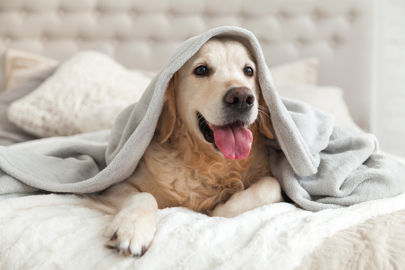
Make a safe space or den for them in the house to retreat to if they feel anxious. If possible, hang a blanket or duvet over the top of the den so it feels secure but make sure that it is firmly in place and can't fall on to your dog.
Before the fireworks begin
-
Top up your dog’s water bowl, as anxious dogs can pant more and become thirsty as a result. Feed your dog earlier in the afternoon, before any disturbances are expected. Once the fireworks have begun they may become too anxious to eat.
-
Make sure the cat or dog flap is secure so your dog can’t unexpectedly get into the garden.
Further advice for looking after your dog during fireworks season
Never take your dog to a firework display, even if they appear to be comfortable and are not showing signs of stress. Don’t assume they are happy. Excessive yawning and panting can indicate that your dog is not feeling safe and secure.
If your dog is struggling to feel calm and is showing signs of stress despite your best efforts, then speak to your vet as they can offer tailored advice to help safeguard the health and happiness of your dog.
A vet may be able to suggest medication that will help keep your dog calmer. If you are considering giving any medication to your dog, make sure you consult your vet first.
For our full page on fireworks night guidance visit here: Fireworks night and dogs | Dog health | The Kennel Club)
To learn about the Royal Kennel Club’s work to reduce the impact fireworks can have on dogs and other animals, visit: Regulation of fireworks | Campaigns | The Royal Kennel Club)